Skip to main navigation menu Skip to main content Skip to site footer

Volume 37

DOI: https://doi.org/10.5399/

Published December 22, 2025

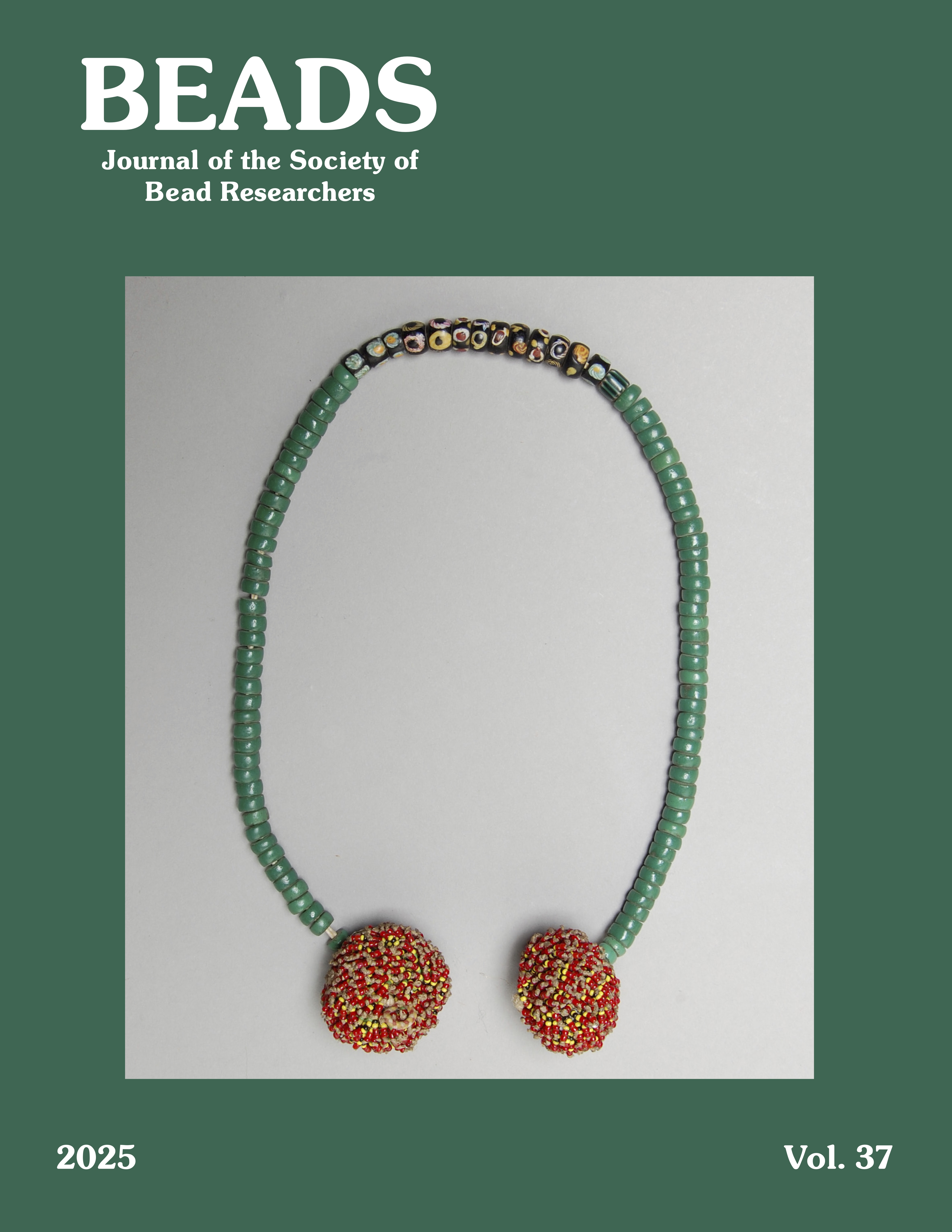
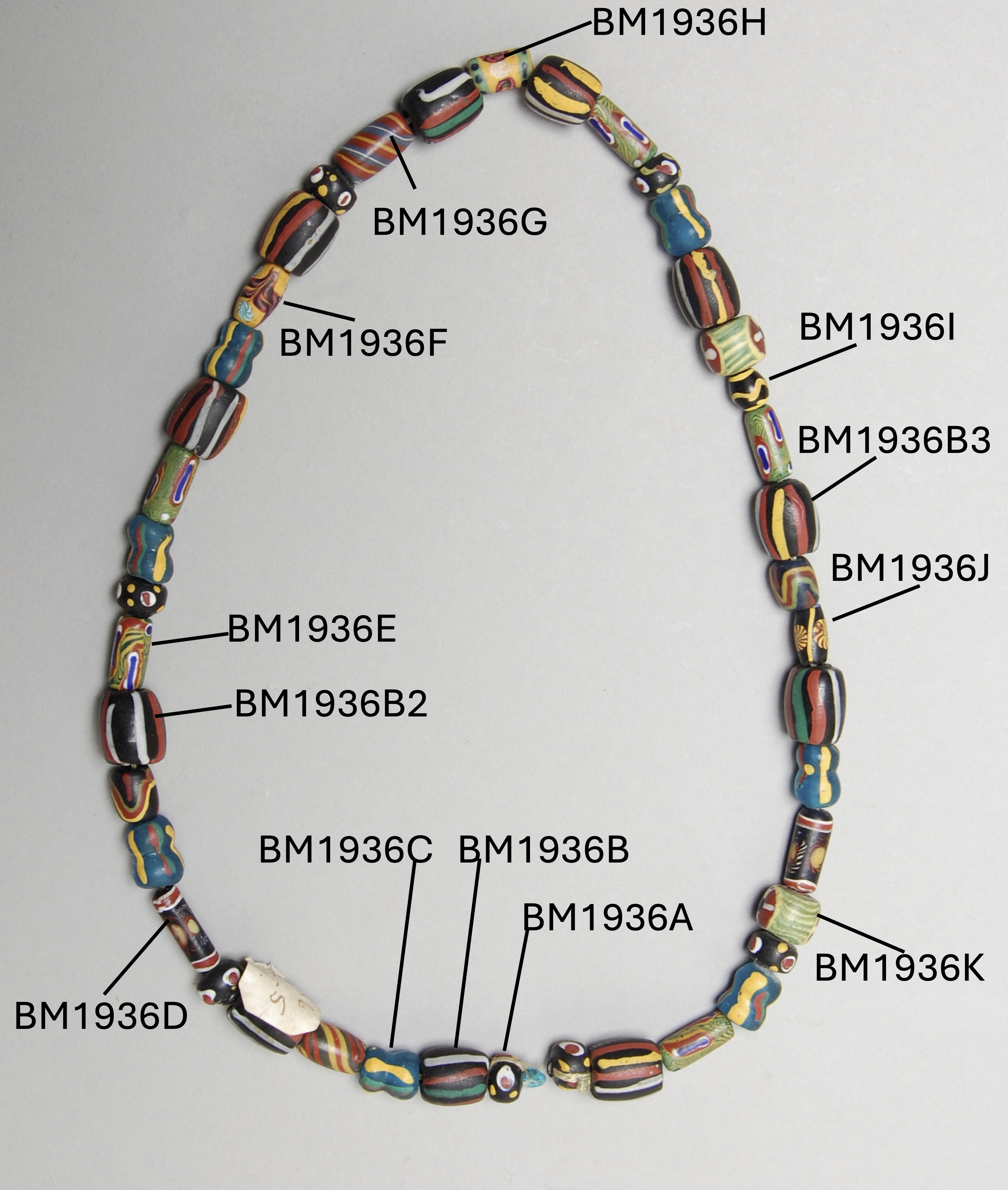
Cover of BEADS journal showing a bead necklace

Issue description

Issue DOIs are coming soon. Scroll down to access issue and article PDFs.


Beads is published annually by the Society of Bead Researchers, a non-profit scientific-educational organization which aims to foster serious research on beads and beadwork of all materials and periods, and to expedite the dissemination of the resultant knowledge. Subscription is by membership in the Society. Membership is open to all persons involved in the study of beads, as well as those interested in keeping abreast of current trends in bead research.

Would you like a print copy of this issue? 

Starting with Volume 36, BEADS has gone fully digital. However, you can opt for a Digital+ membership that includes a print-on-demand copy in addition to access to the online PDF.  For more information on this membership level, please visit: https://beadresearch.org/membership/.

Other readers can order a hard copy of this issue via a print-on-demand service. *A link to purchase a hard copy will be posted here in Feb/March 2026.*  

Articles

  1. Compositional Analysis of Glass Beads from Borneo and Java

    In this paper, we present the results from compositional analysis of heirloom glass beads from the island of Borneo and Java, Indonesia. A large portion of the beads in this study are from Borneo and housed in the British Museum’s collections. A smaller subset of beads from Campbell Cole’s collection likely come from Java. Previous studies of heirloom beads from Borneo (e.g., Campbell Cole 2022) have raised questions about where the beads came from and the trade networks that brought them to Borneo. Using laser ablation-inductively coupled plasma-mass spectrometry (LA-ICP-MS) we have identified four glass compositions used to produce the beads: soda-lime glasses, lead glasses, mixed-alkali glasses, and potash glass. Using comparative datasets, we attempt to identify possible manufacturing locations for the glass and find that many beads likely derive from 19th-century CE Venetian workshops. It is hoped that these bead compositions will be of use to future scholars studying glass beads and their exchange in the region.
  2. The Characteristics and Possible Provenance of the Fluorapatite Beads and Other Ornaments From Middle Chalcolithic-Period Tel Tsaf in the Jordan Valley, Israel

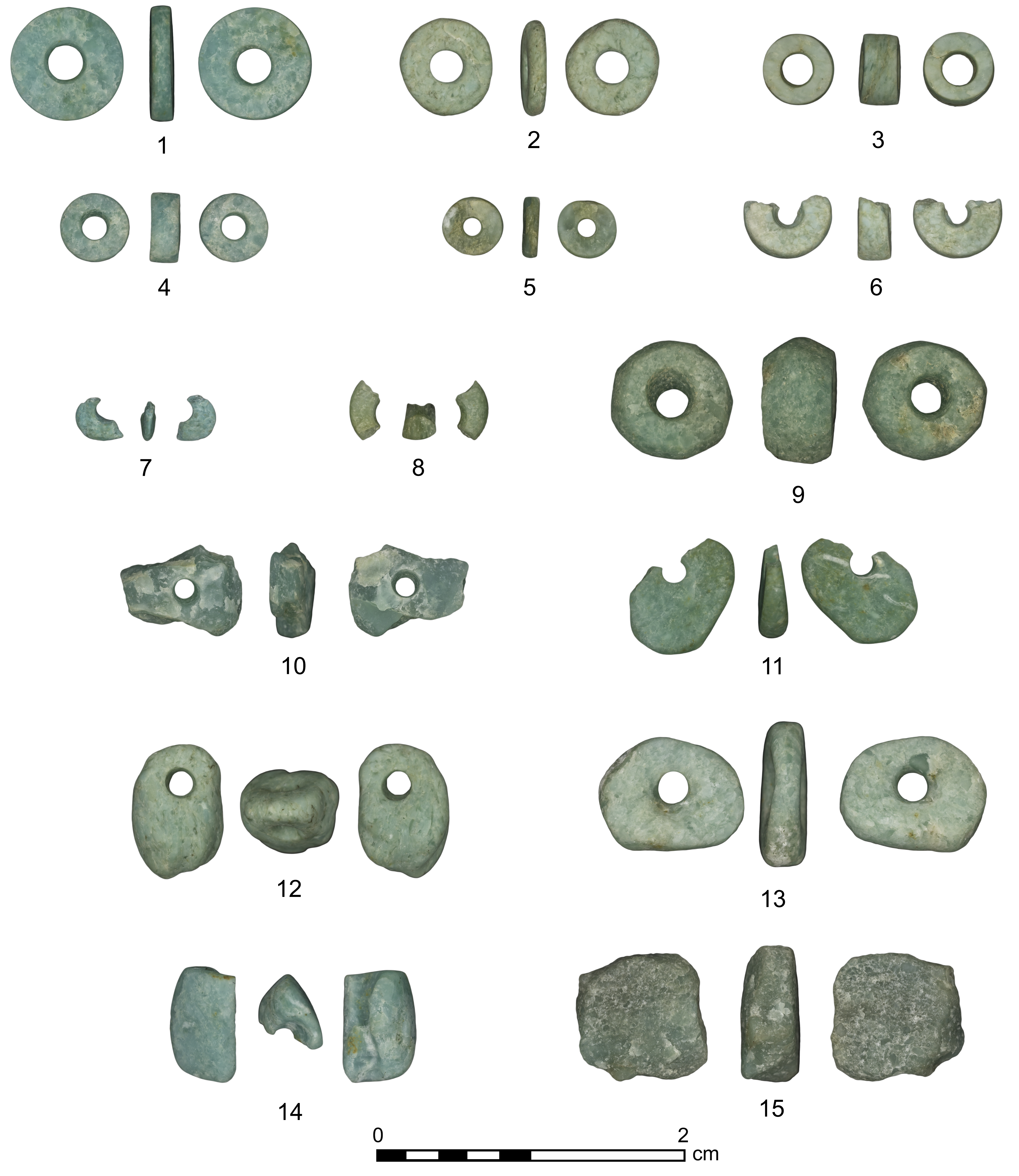
    Beads and other ornaments first appeared during the Palaeolithic period; their small size allowed them to travel considerable distances. Beads also convey cultural, symbolic, and social information. The current paper presents a late 6th–early 5th-millennium BC assemblage of fluorapatite beads, ornaments, and raw material chunks from Tel Tsaf, Jordan Valley, Israel. It discusses their chemical composition, possible sources, distribution, and morphometric and technological characteristics. The results suggest that the raw material for these beads and ornaments derives from the Hatrurim and Daba-Siwaka complexes. While most of the outcrops of these complexes are in the Mottled Zone around the Dead Sea, two additional sources are located closer to Tel Tsaf and near two contemporary sites in Jordan. Although we could not assign the fluorapatite items to a specific source, they may offer the first evidence, beyond the typical Tel Tsaf decoration motifs, for contact between the region’s Middle Chalcolithic sites.

  3. Classification of the Fort St. Joseph (20BE23) Excavated Bead Collection

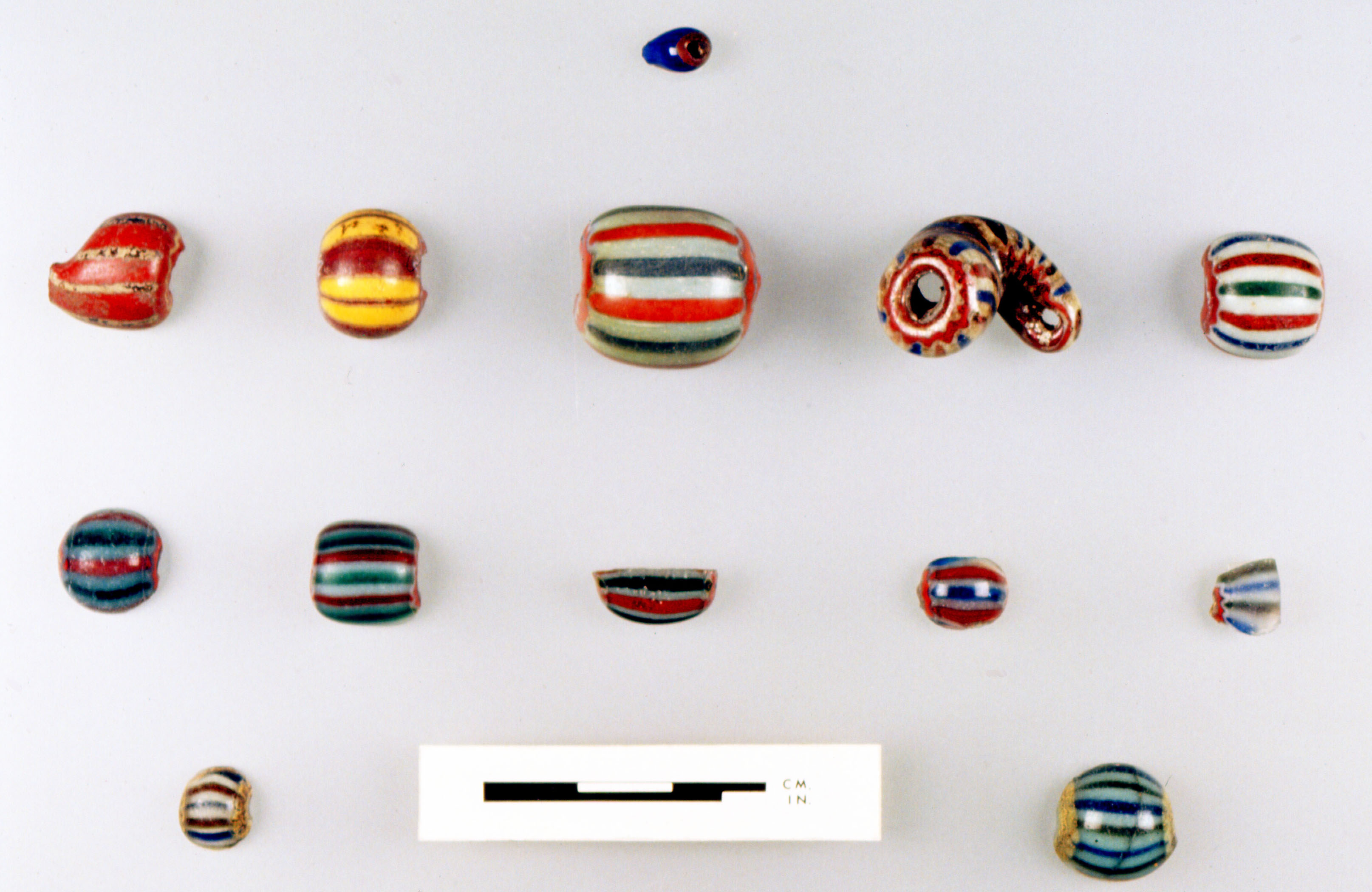
    The archaeological site of Fort St. Joseph (20BE23), occupied from 1691 to 1781 CE, was a French colonial outpost located along the St. Joseph River near present-day Niles, Michigan. It was situated among the Miami, Potawatomi, and Sauk peoples. This article describes the examination and classification of the glass and non-glass beads recovered archaeologically from 2002 through 2006. A total of 52 types, including 32 new glass varieties (and some types) were identified along with six non-glass categories. This study concludes with a discussion of possible uses for the beads by the people living in and around the fort.

  4. Glass Bead Production Wasters Related to the First “De Twee Rozen” Glasshouse (1621-1657) in Amsterdam

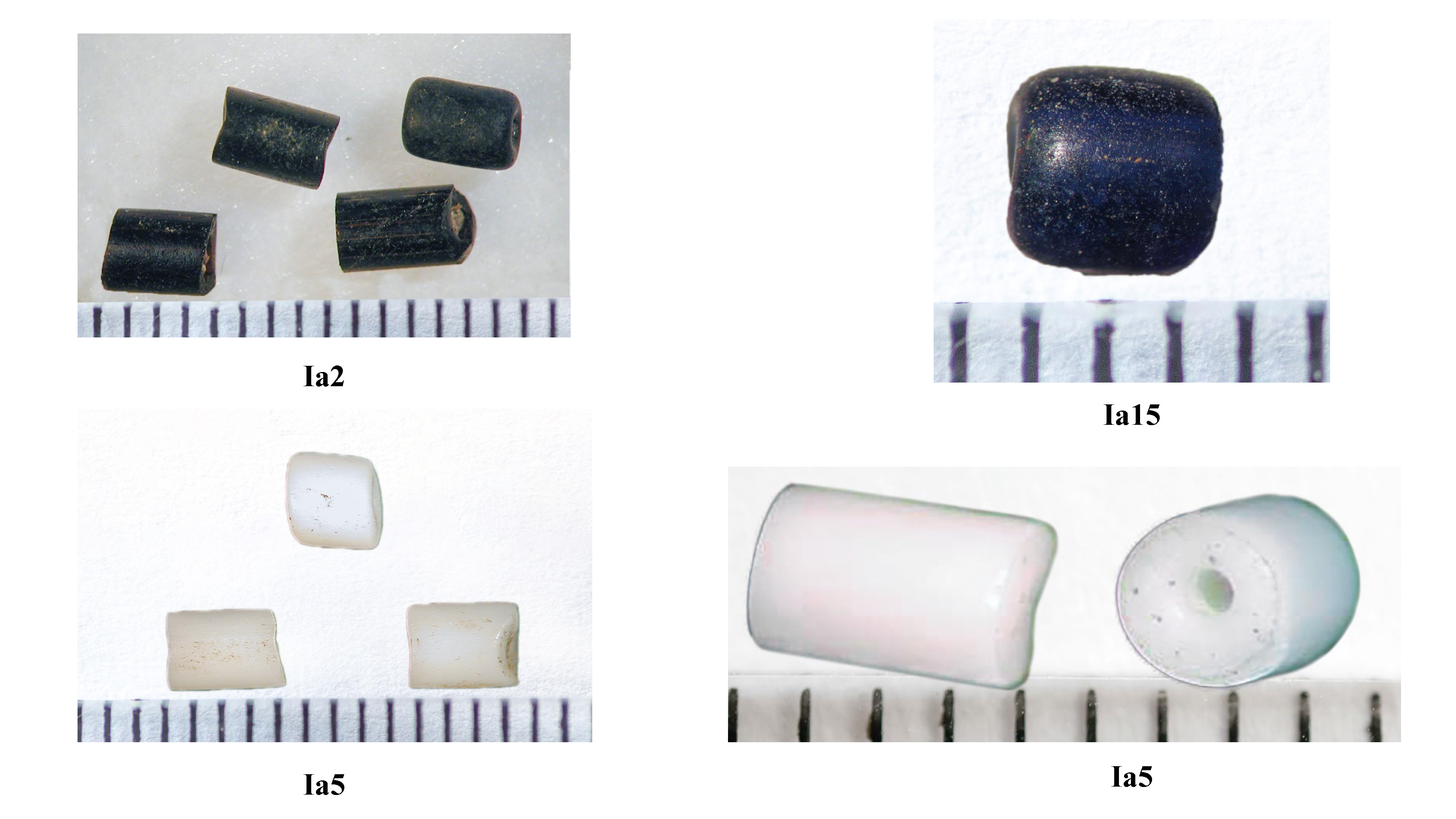
    This report presents an illustrated inventory of the numerous beads, rejects, and bead production tube remnants recovered from a documented glassworks in Amsterdam which operated primarily during the second quarter of the 17th century. It is intended as a supplement to an earlier published article. Also included is a discussion of the difficulty in identifying Dutch beads in archaeological collections since other contemporary European beadmaking centers also made some of the varieties produced in Amsterdam. Compositional analysis may help resolve this situation.