
Volume 36
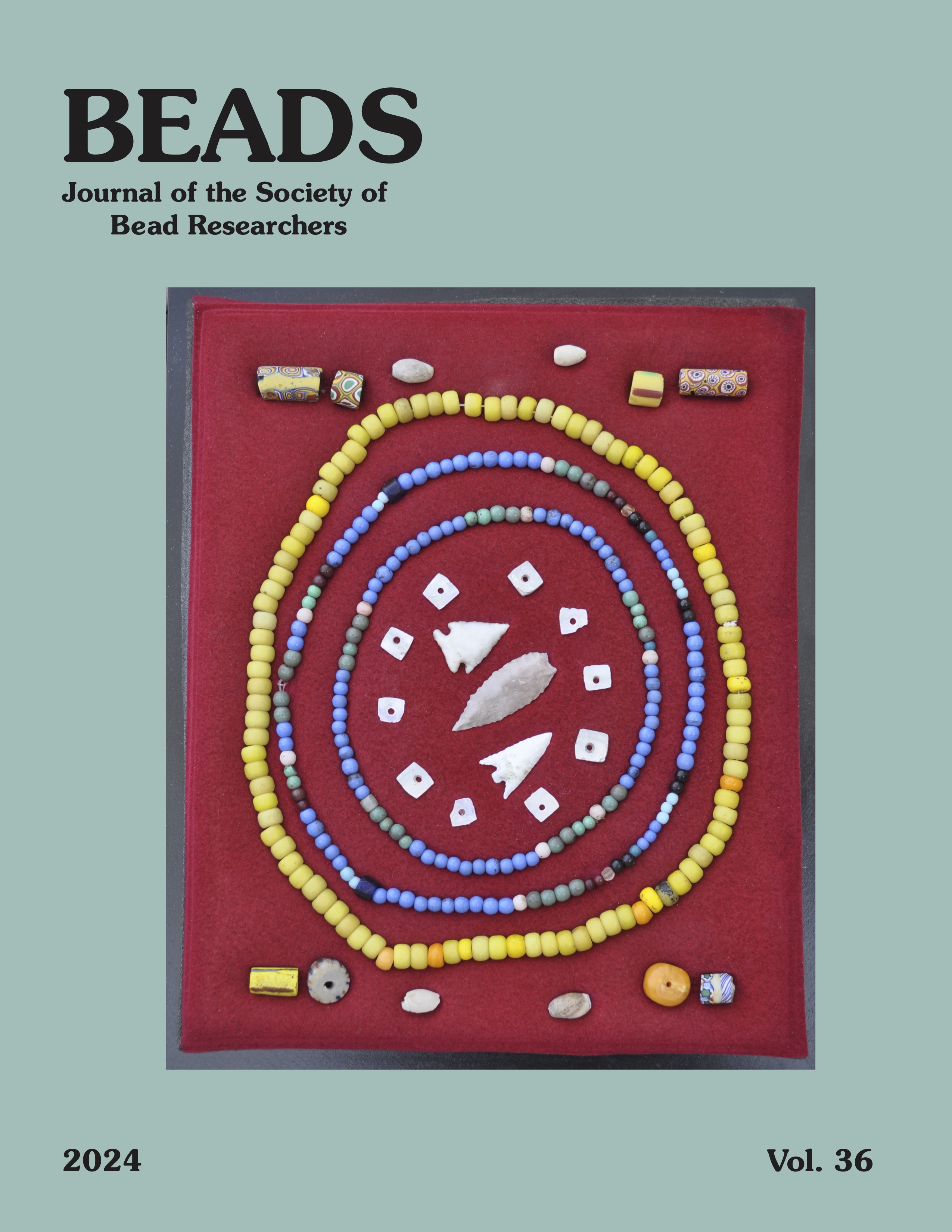
Issue description
Beads is published annually by the Society of Bead Researchers, a non-profit scientific-educational organization which aims to foster serious research on beads and beadwork of all materials and periods, and to expedite the dissemination of the resultant knowledge. Subscription is by membership in the Society. Membership is open to all persons involved in the study of beads, as well as those interested in keeping abreast of current trends in bead research.
Would you like a print copy of this issue?
Starting with Volume 36, BEADS has gone fully digital. However, if you would like a print copy of this issue, you can order one via a print-on-demand service by following this link. This will allow readers to order individual copies that will be printed and mailed directly to them directly using this third-party service.
Full Issue
Front Matter
Articles
-
An XRF Elemental Analysis of Prosser Molded Beads from Southern Oregon
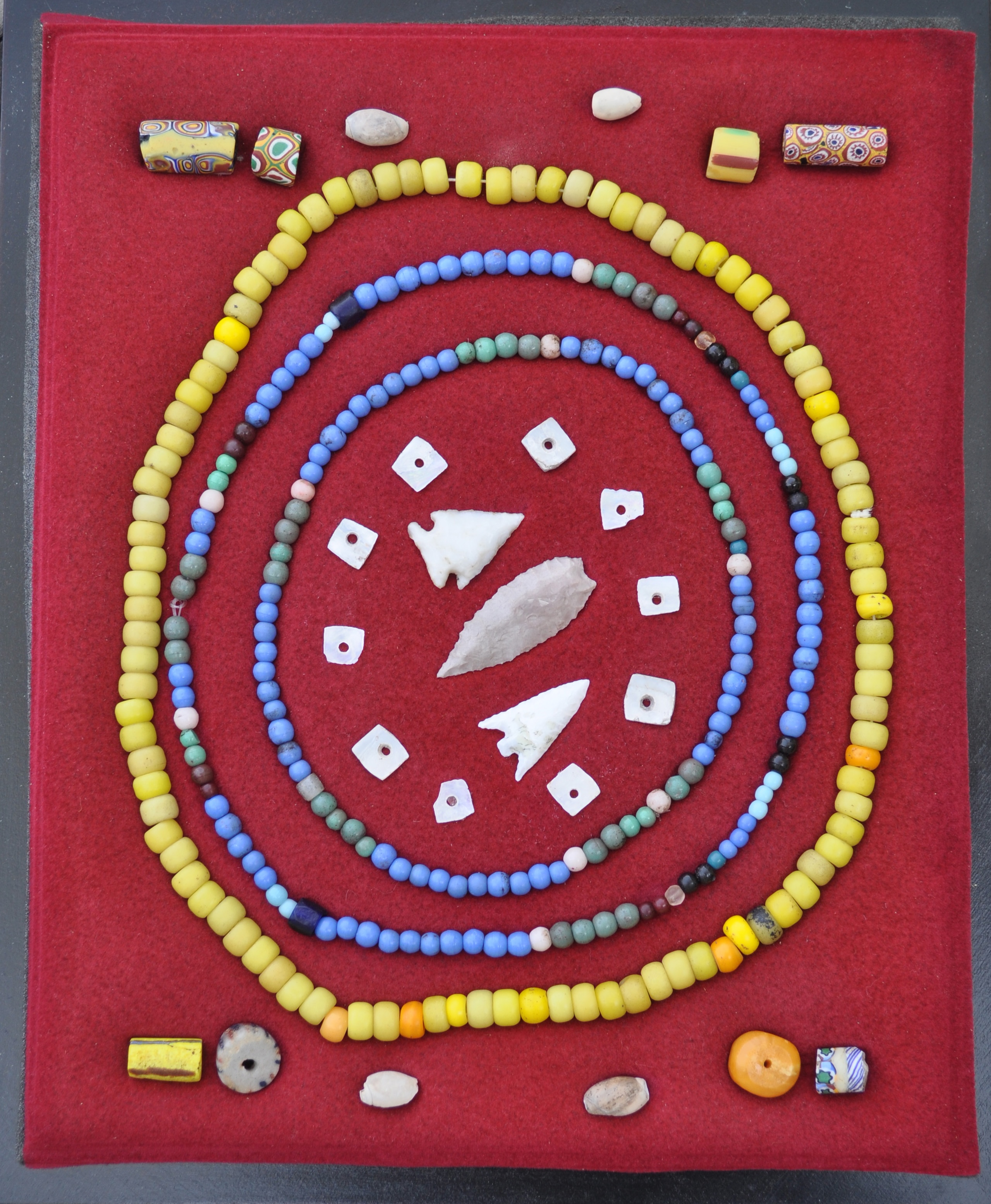
Prosser molded beads were made in France and Bohemia from the 1860s to the 1970s for trade in Africa and North America. Extensive sales and distribution networks were created by the Bapterosses (France) and Redlhammer (Bohemia) companies to both continents. Their innovative manufacture makes them visually and chemically distinct. In this study, 175 Prosser molded beads found in an archaeological context in south-central Oregon were examined with XRF. The purpose of the study is to determine if elemental analysis can be used to understand where and when Prosser molded beads were manufactured. Three groups of elements that are chemically related, either naturally or by deliberate addition, were examined to identify which of them showed statistically significant variation in the composition. Results show chemical variation between beads of the same color that fall into at least two distinct production groups.
-
Strong Contrasts: Beadwork from the Okavango
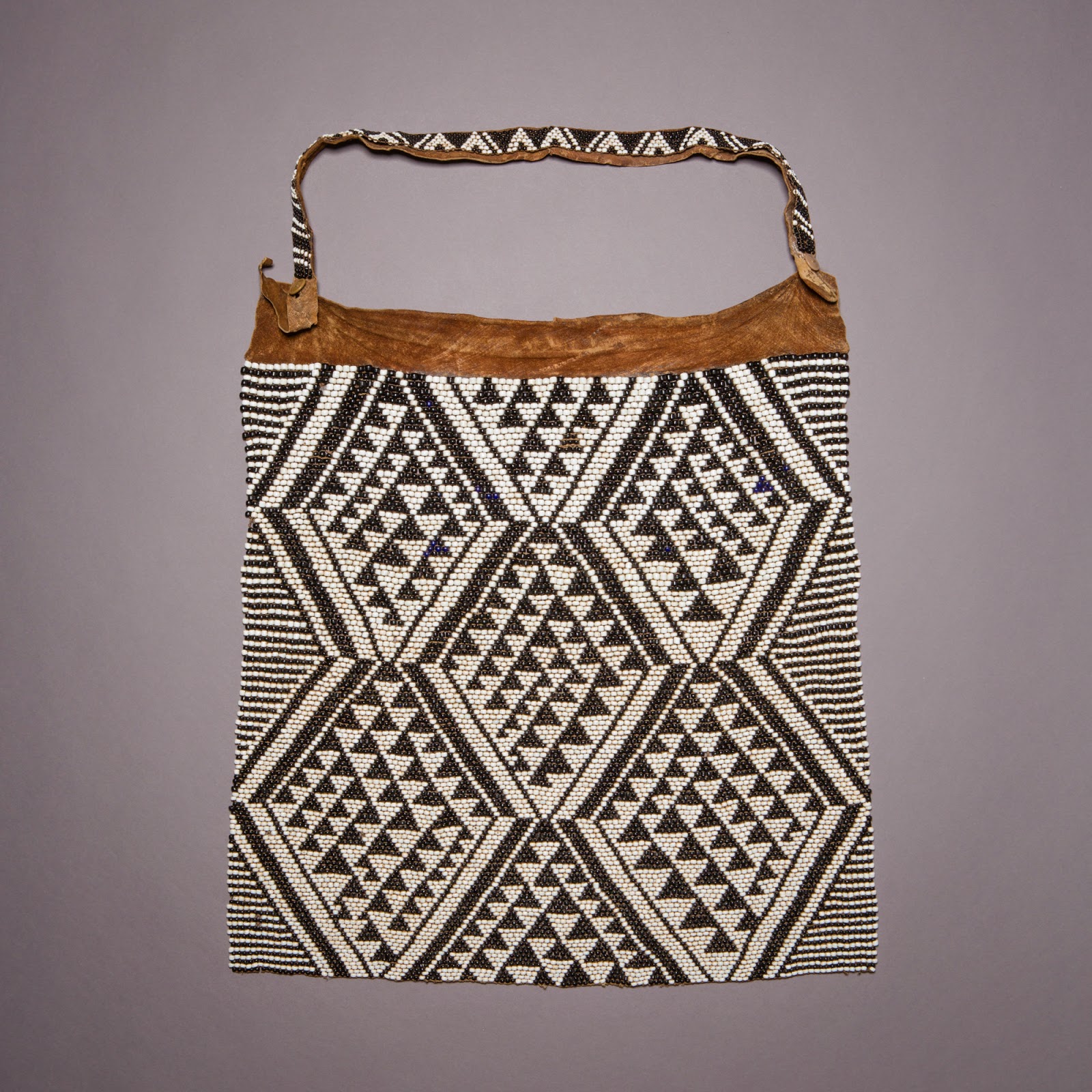
With its black and white contrasts and interplay of positive and negative spaces, the beadwork of the Mbukushu and Yei of Botswana brings to mind the geometric designs of Op Art. In some pieces the pattern creates an almost three-dimensional effect. Because of their attractiveness and rarity, such works now fetch considerable prices on the art market. However, it is always difficult to distinguish between the works of the two peoples, whose style was also decisively influenced by a third people, the Tawana. Rudolf Pöch’s Tawana collection at the Weltmuseum Wien is used to demonstrate the mutual influence of the material culture of three peoples living in close proximity at the beginning of the 20th century.
-
Tooth Beads in Two Hunter-Fisher-Gatherer Societies of Northern Europe
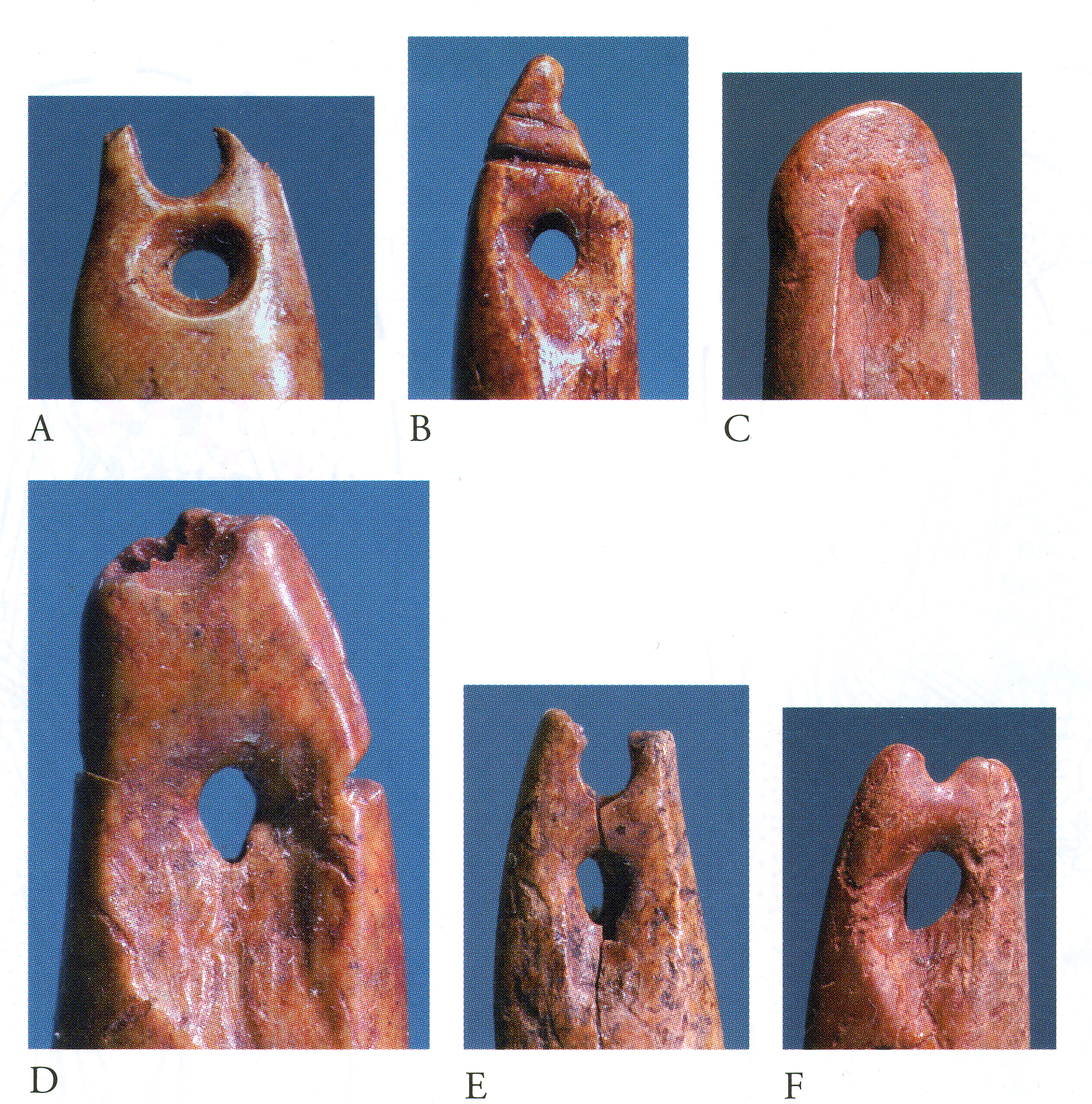
Beads made from animal teeth were an important form of decoration among hunter-gatherer societies in Northern Europe. The analyses presented in this paper are based on questions regarding the design of the beads, the choice of animal teeth, their placement on the costume, and the exchange of beads. For these analyses, two sites with partly different conditions have been selected, one located in northern Latvia (Zvejnieki), and the other in southernmost Sweden (Skateholm). The former covers a long period of use with a large number of graves, while the latter has a smaller number of graves, but these have been studied using new methods of analysis.
-
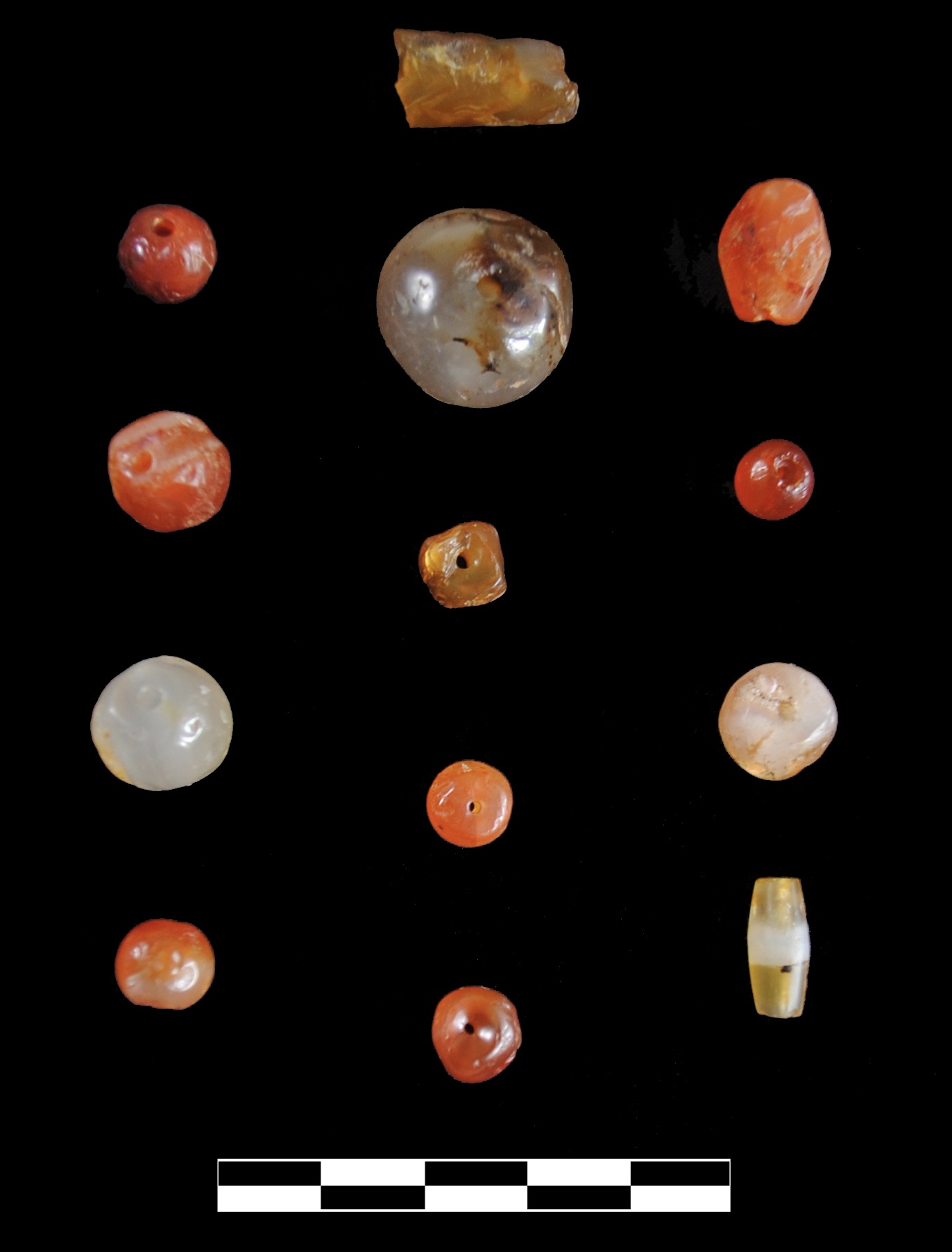
Report on the Stone Beads, Debitage and Raw Materials from the 2007 and 2008 Excavation Seasons at Pattanam, Kerala
This article examines stone beads and production debris from the 2007-2008 excavations at the site of Pattanam in South India. An analysis of finished beads and debitage indicates that the bead assemblage at Pattanam is distinct from other bead production sites in southern India, namely Arikamedu and Kodumanal. Bead producers at Pattanam focused largely on agate, carnelian, and chalcedony materials, with beads having been manufactured using the “pecking” method. Scholar Peter Francis, Jr., had previously argued that there were two technological traditions of stone bead production in South India, which were associated with two different cultural/ethnic groups. Evidence from Pattanam challenges this assertion, arguing that different ethnic groups did not exclusively work with particular raw materials or manufacturing methods.
-
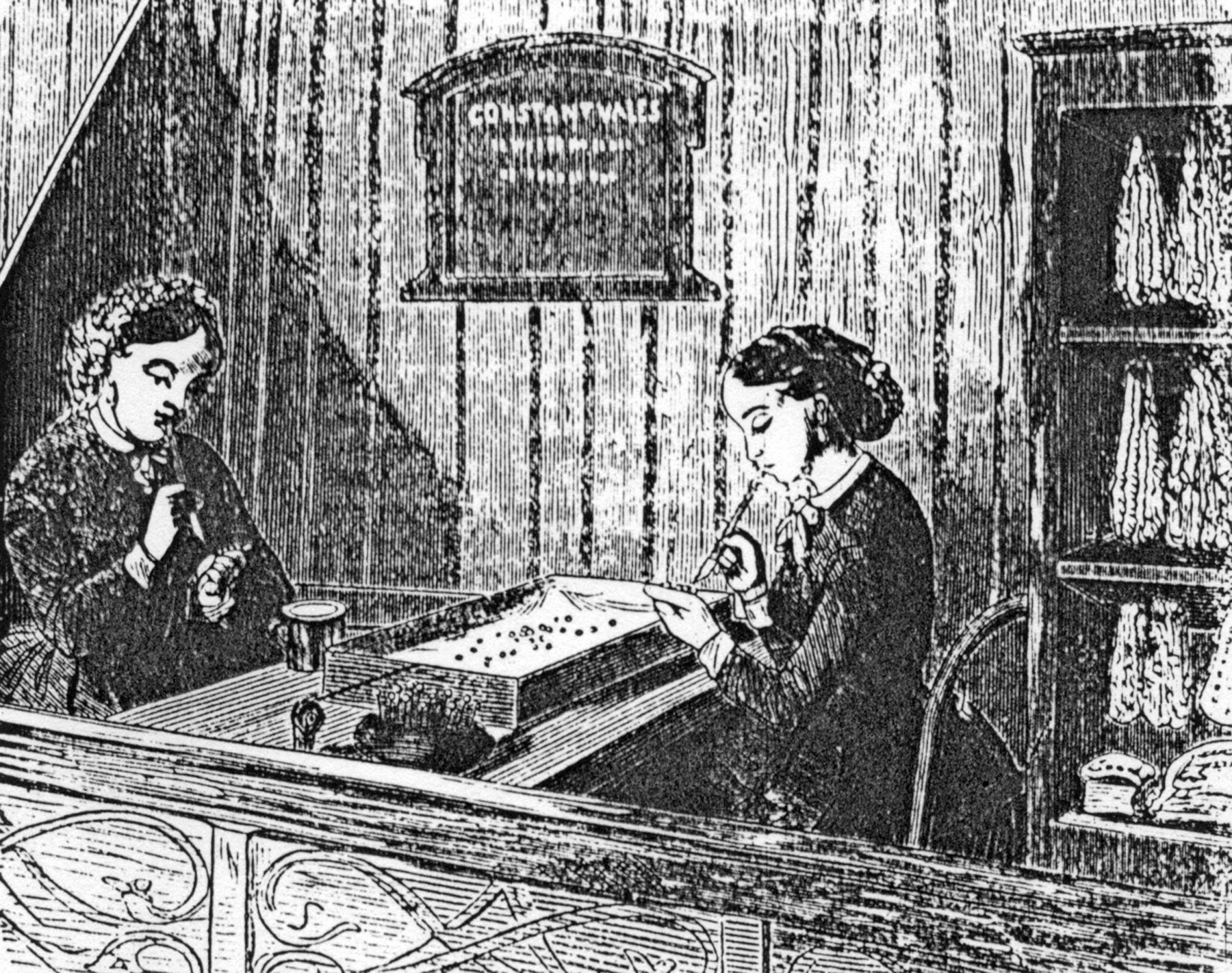
Artificial Pearl Making: Employment for Women
This item appeared in the January 1871 issue of Godey’s Lady’s Book and Magazine (Vol. 82, No. 487, pp. 65-67), published in Philadelphia. It provides a relatively detailed description of the production of faux pearls as practiced in France, highlighting the role women played in their creation.
Reviews
-
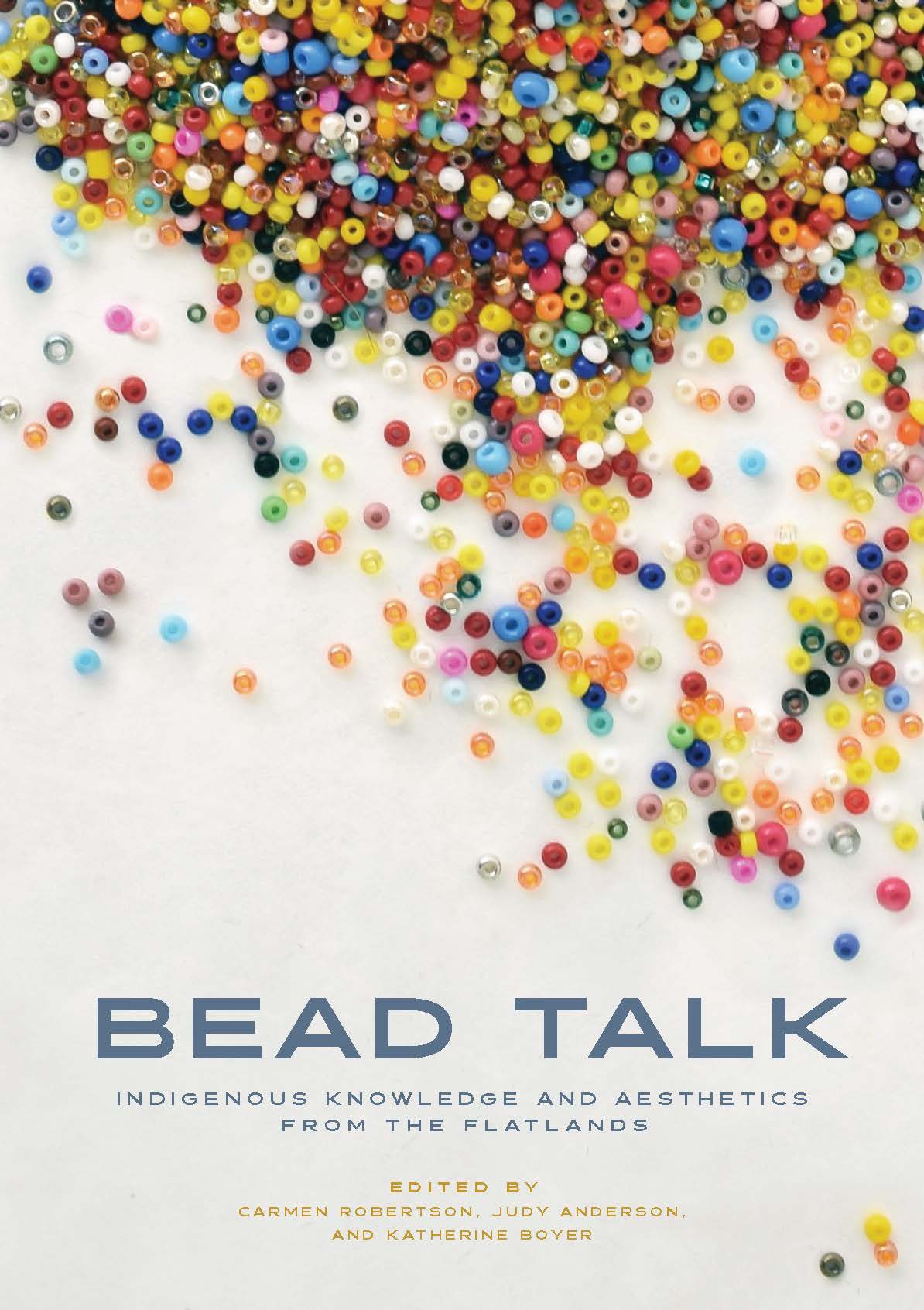
Bead Talk: Indigenous Knowledge and Aesthetics from the Flatlands
Review of Robertson, C., J. Anderson and K. Boyer, (editors) 2024 Bead Talk: Indigenous Knowledge and Aesthetics from the Flatlands. University of Manitoba Press, City.
-
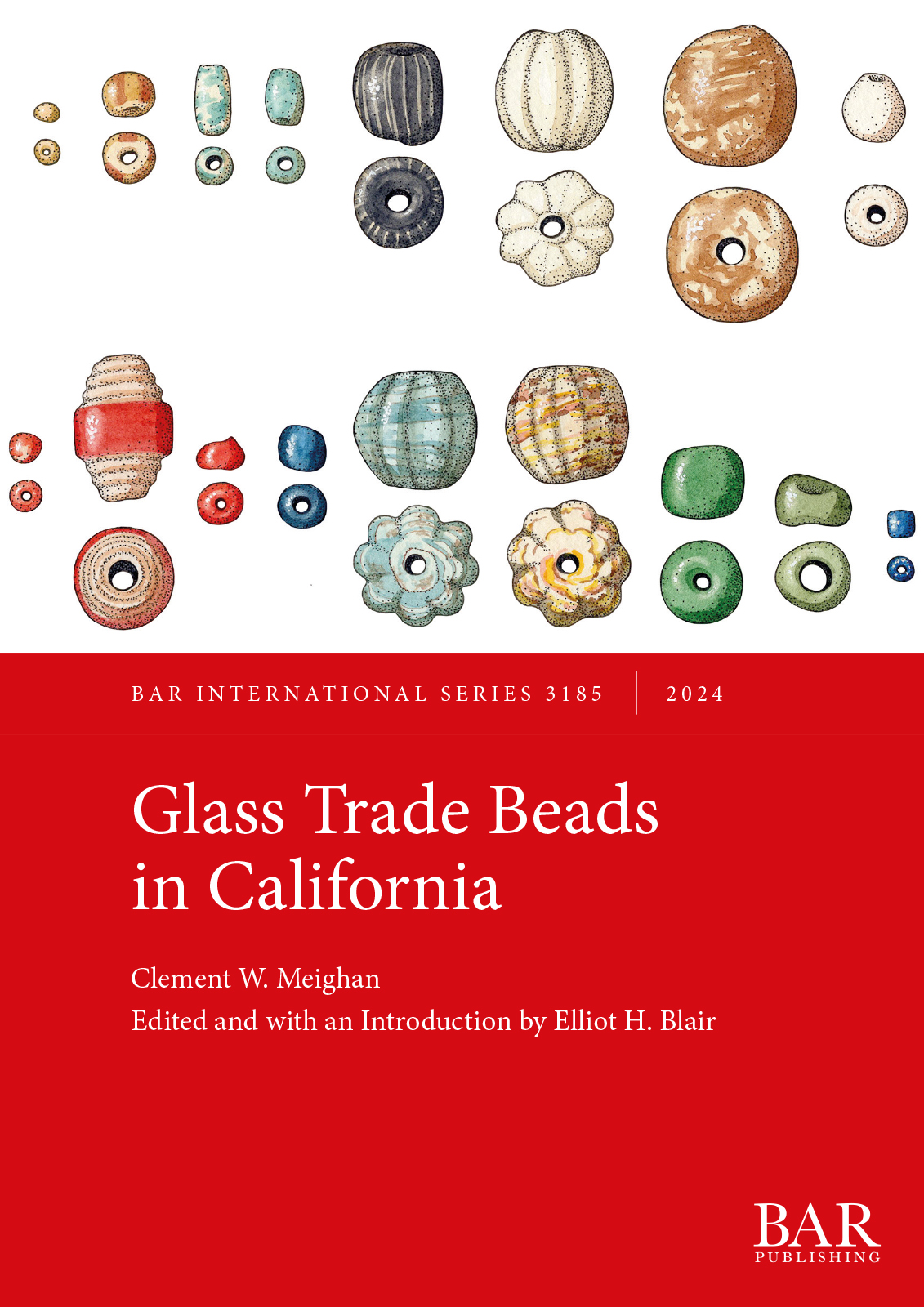
Meighan, Clement W. Glass Trade Beads in California, edited by Elliot H. Blair
Review of Meighan, Clement W. Glass Trade Beads in California, edited by Elliot H. Blair
-
Laure Dussubieux and Heather Walder (eds.) The Elemental Analysis of Glass Beads: Technology, Chronology and Exchange.
Review of Laure Dussubieux and Heather Walder (eds.) The Elemental Analysis of Glass Beads: Technology, Chronology and Exchange.